
Robotic Integration Done Right: How Hatz AI Platform Simplifies Warehouse Automation
“We see this pattern constantly in warehouse gap audits — operations teams paying for 3-4 overlapping software layers just to keep robots talking to the WMS, often adding 20%+ to annual software costs with zero throughput benefit.”
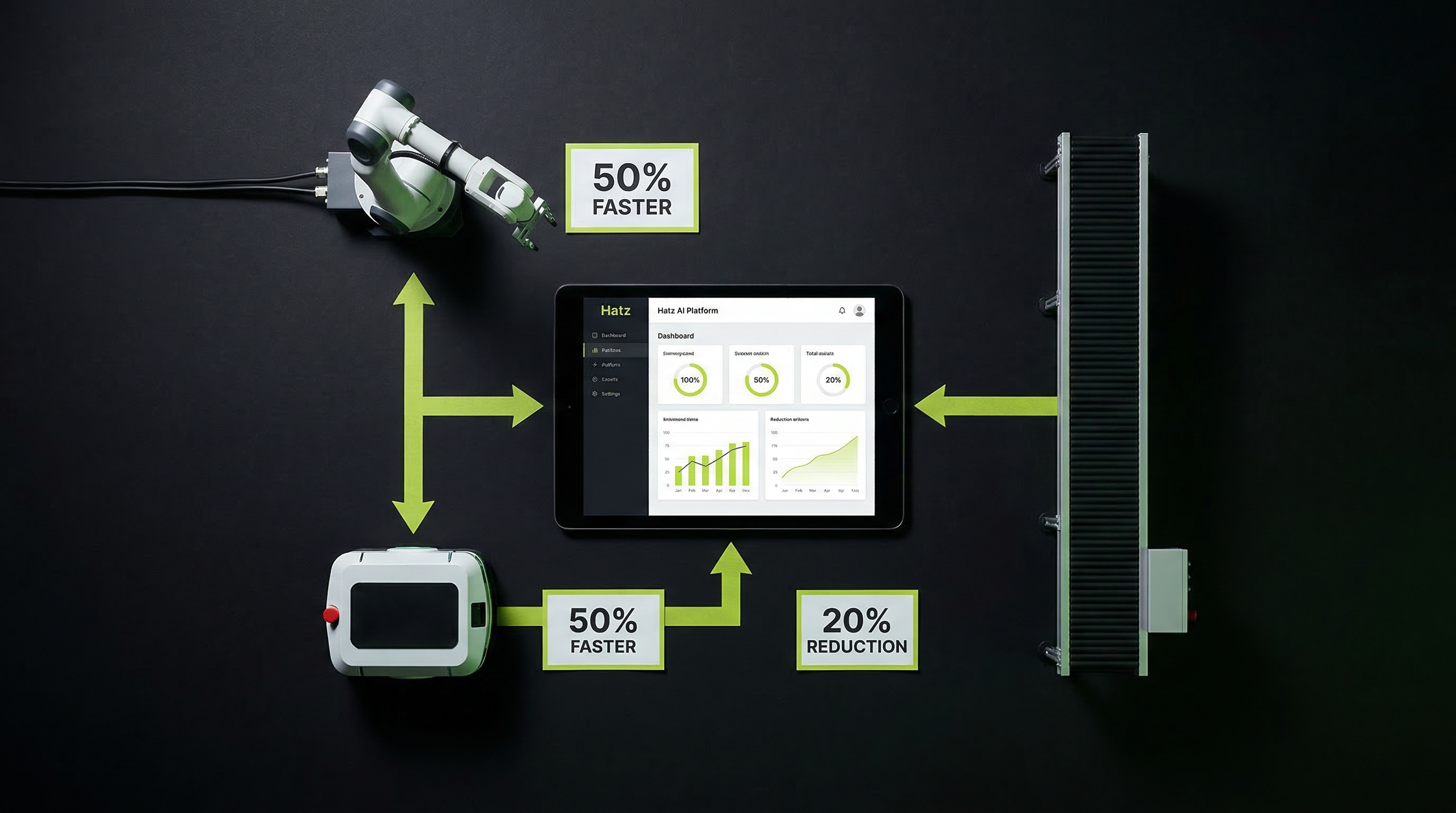
Warehouse operators running multiple robot vendors face a hidden integration tax — every separate WMS, WCS, and WES layer adds maintenance contracts, middleware, and failure points that slow deployment. Roboteon's approach collapses orchestration into a single software platform that manages mixed robotic fleets from one control layer, cutting the number of integration touchpoints and aiming to get warehouses live with robotics faster. For operations leaders evaluating automation, the real cost question isn't the robots — it's how many software layers sit between the robot and the pick.
From the Source
"We deliver WMS, WCS, and WES functionality in one platform so customers don't have to maintain separate systems for each layer of warehouse execution."
— How Roboteon Simplifies Robotic Integration for Warehouses
Key Takeaways
- 01Roboteon consolidates WMS, WCS, and WES functions into one platform, reducing middleware and integration contracts
- 02Mixed-fleet orchestration lets warehouses run robots from multiple vendors through a single control layer
- 03Industry benchmark: multi-system warehouse architectures typically carry 20-35% higher total maintenance costs vs. unified platforms (Gartner supply chain research)
- 04Faster deployment timelines by eliminating point-to-point integrations between separate execution systems
- 05Reduces vendor lock-in risk — single orchestration layer means swapping or adding robot types doesn't require re-architecting the stack
Watch the Source
How Roboteon Simplifies Robotic Integration for Warehouses
Source
How Roboteon Simplifies Robotic Integration for Warehouses
Video embedded above — watch without leaving the site
Extracted and verified via Adversarial AI Pipeline
// RELATED SOLUTIONS
Get the IE.AI Weekly Brief
Top 3 AI-distilled industrial engineering insights, every Sunday. No fluff.
No spam. Unsubscribe anytime with one click.