
AI GeneratedOPS & AUTOMATIONInsight
Autonomous Carts Are Just the Start: Why Warehouse AI Orchestration Delivers 10X ROI
Apr 18, 2026
|Adversarial AI Pipeline
M
Mike's Take— Mike Sanders, Founder“We see too many warehouse automation projects stall because the robot can't handle the 5-10% edge cases — a one-second physical override is how you close that gap without paying a $50K+ integration tax for exception handling.”
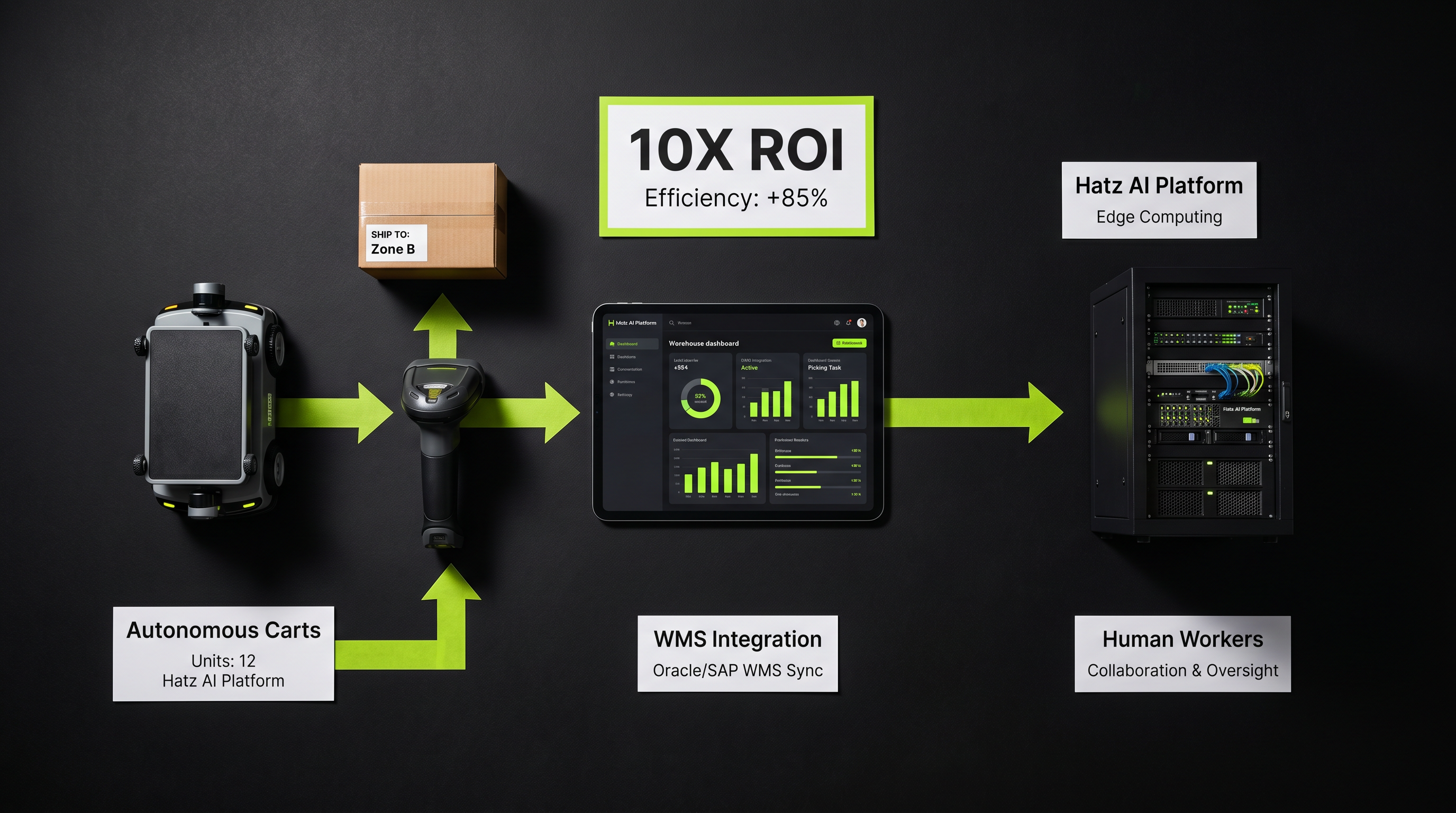
Robust AI's Carter cart switches from autonomous to manual mode in one second — an operator just grabs the handle and moves it. For warehouse operations running mixed human-robot workflows, that single-second handoff is the difference between a cart that works with your pickers and one that becomes another bottleneck when exceptions hit.
From the Source
"Switch from autonomous to manual mode in a second just by grabbing the handle and moving it."
— Robust AI's Carter Manual and Autonomous Cart for Warehouses
Key Takeaways
- 011-second transition from autonomous to manual mode by grabbing the handle
- 02No software menu, button press, or supervisor override required
- 03Physical handle interaction is the mode switch — zero training overhead
- 04Keeps human-in-the-loop without sacrificing autonomous throughput
- 05Hybrid operation model fits brownfield warehouses where full automation isn't practical
Watch the Source
Robust AI's Carter Manual and Autonomous Cart for Warehouses
Source
Robust AI's Carter Manual and Autonomous Cart for Warehouses
Video embedded above — watch without leaving the site
Extracted and verified via Adversarial AI Pipeline
Get the IE.AI Weekly Brief
Top 3 AI-distilled industrial engineering insights, every Sunday. No fluff.
No spam. Unsubscribe anytime with one click.