
AI Doesn’t Just Reduce Costs—It Redefines Operational Efficiency Across Industries
“We see this as the same pattern we find on manufacturing floors and in warehouse operations — 60% of the labor hours sitting in low-judgment, repetitive tasks that AI agents handle faster and more consistently. When your vendor's own cost structure drops by 20%+ and they're not passing it through, that's a P&L leak worth tens of thousands to millions depending on your audit complexity.”

KPMG negotiated a 14% cut in its own audit fees ($416K to $357K) by arguing AI should make auditors more efficient — and in doing so, handed every CFO a proven playbook to renegotiate their own audit costs. With 60% of audit work performed by junior staff (0-4 years experience) on tasks the author says 'could easily be done by a monkey,' the pressure on professional services firms to pass AI-driven efficiency gains back to clients is no longer theoretical — it's already showing up in public fee disclosures.
From the Source
"With current AI tools and processes, I could easily see 60%+ of audit work being automated that is currently done by humans. Why do I think that? Well, 60% of the work is done by Associates and Senior Associates and the work they do could easily be done by a monkey."
— AI is Coming for Audit Fees | KPMG Just Proved It
Key Takeaways
- 01KPMG cut its own audit fees 14% ($416K → $357K) by pressuring Grant Thornton on AI efficiency
- 0260% of audit work is done by Associates and Senior Associates (0-4 yrs experience) — work the author says is highly automatable with current AI tools
- 03Accounting firms generate ~50% of revenue from audit and tax, both high-exposure targets for AI automation
- 04Public company audit fee benchmarking is easy (required disclosure) — Expensify pays $3M on $140M revenue while Domo pays $2.2M on $365M revenue, showing wide pricing variance ripe for challenge
- 05Big 4 retain pricing power through trust moats, but tier 2 firms adopting AI aggressively could reshuffle the top 10
Read the Source
# AI is Coming for Audit Fees
**Today’s Sponsor:** Deel
[

](https://www.deel.com/resources/guide-to-international-payroll-costs/?utm_medium=sponsored-%20newsletter&utm_source=onlycfo&utm_campaign=ww_engage_download_onlycfo_sponnewsletter_fin-intlpayrollcostsguide-%20feb26_gp_all&utm_content=engage_gp_sponnewsletter_intlpayrollcostsguide-sponnews400-fin_en)
Global payroll costs extend far beyond salaries. [This guide](https://www.deel.com/resources/guide-to-international-payroll-costs/?utm_medium=sponsored-%20newsletter&utm_source=onlycfo&utm_campaign=ww_engage_download_onlycfo_sponnewsletter_fin-intlpayrollcostsguide-%20feb26_gp_all&utm_content=engage_gp_sponnewsletter_intlpayrollcostsguide-sponnews400-fin_en) breaks down international payroll expenses, compliance costs, and hidden fees so you can forecast accurately, reduce risk, and improve cost efficiency as you scale. Built for finance leaders managing multi-country operations.
[Guide to International Payroll Costs](https://www.deel.com/resources/guide-to-international-payroll-costs/?utm_medium=sponsored-%20newsletter&utm_source=onlycfo&utm_campaign=ww_engage_download_onlycfo_sponnewsletter_fin-intlpayrollcostsguide-%20feb26_gp_all&utm_content=engage_gp_sponnewsletter_intlpayrollcostsguide-sponnews400-fin_en)
Oh, the irony….KPMG reportedly negotiated lower fees from their auditor, Grant Thornton, by arguing that AI should be making them more efficient. I am imagining it went something like, “If you are more efficient because of AI, then you need to pass on some cost savings to us!”
KPMG reportedly threatened to change auditors if they didn’t reduce their fees. And it looks like KPMG’s tactics worked. Fees paid for KPMG’s 2025 audit decreased by 14% from the prior year ($416K to $357K).
But their hard negotiations may backfire in a major way. **KPMG just gave every single audit client the playbook for re-negotiating audit fees in 2026.**
I started my career working in audit at the Big 4 firm in the Bay Area. And now I am on the other side (at companies being audited by Big 4). So I am familiar with how they price, their economics, how inefficient they can be, and how disruptive AI can be to their current business model.
Nope. Big 4 firms have one of the strongest moats possible in an AI world. But their economics will definitely change as a result of AI.
Matt Levine explained the irony of KPMG’s negotiations nicely:
> “Ehh auditing can basically be done by AI so why should we pay for it” is not a crazy thing for most companies to think, or to say to their auditors, but it _is_ a crazy thing for an _auditing firm_ to say to its auditor.
So did KPMG admit that their business model is being disrupted?
Of course audit firms know that AI is disruptive. All of them are working internally to adopt it. But like all professional service industries, no one wants to cannibalize their revenue by passing on cost savings from AI. Until they have to.
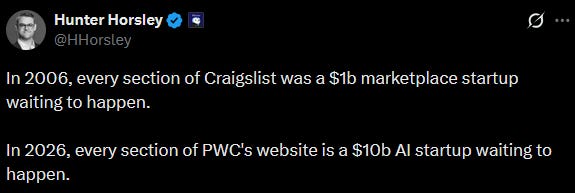
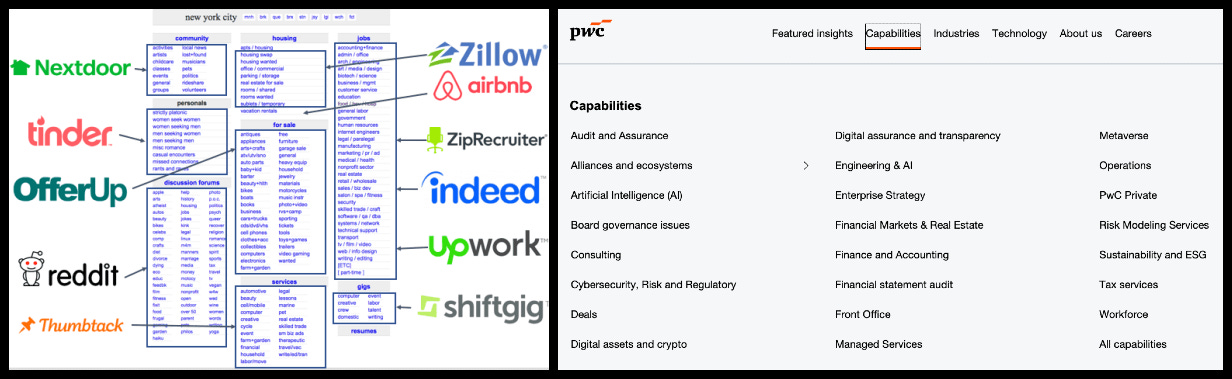
The professional services industry is a market that is ripe for disruption by AI agents. Accounting firms are no exception. I thought the below comparison was interesting.
[
](https://substackcdn.com/image/fetch/$s_!K64S!,f_auto,q_auto:good,fl_progressive:steep/https%3A%2F%2Fsubstack-post-media.s3.amazonaws.com%2Fpublic%2Fimages%2F75f5a25a-dd18-4808-981e-e43038872194_575x193.png)
[
](https://substackcdn.com/image/fetch/$s_!PIPR!,f_auto,q_auto:good,fl_progressive:steep/https%3A%2F%2Fsubstack-post-media.s3.amazonaws.com%2Fpublic%2Fimages%2F4d796abb-0b4a-483b-863e-b6acb1ae7007_1232x379.png)
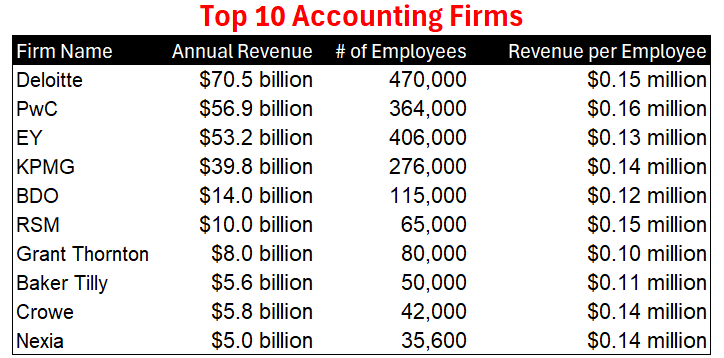
The accounting firm market is huge…Massive AI-native companies are being built by attacking the accounting firm markets.
Even if we didn’t have AI, I think most of these firms could have 20%+ less headcount and get the same job done. And if they fully implemented the AI that we **already** have today? Significantly smaller headcounts…
[
](https://substackcdn.com/image/fetch/$s_!hnxj!,f_auto,q_auto:good,fl_progressive:steep/https%3A%2F%2Fsubstack-post-media.s3.amazonaws.com%2Fpublic%2Fimages%2Fae3b3a87-6c7a-4775-9f64-a1f60b9f4c39_724x358.png)
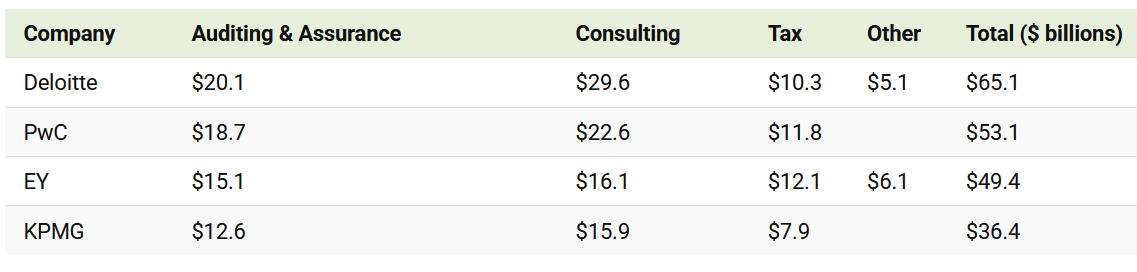
Accounting firms generate ~50% of their revenue from audit and tax, which are both easy targets for AI. The business breakout below is from 2023 (similar breakouts today as well).
[
](https://substackcdn.com/image/fetch/$s_!Rsyp!,f_auto,q_auto:good,fl_progressive:steep/https%3A%2F%2Fsubstack-post-media.s3.amazonaws.com%2Fpublic%2Fimages%2F07a4e07a-2726-4517-b7bb-7c0eede68458_1137x272.png)
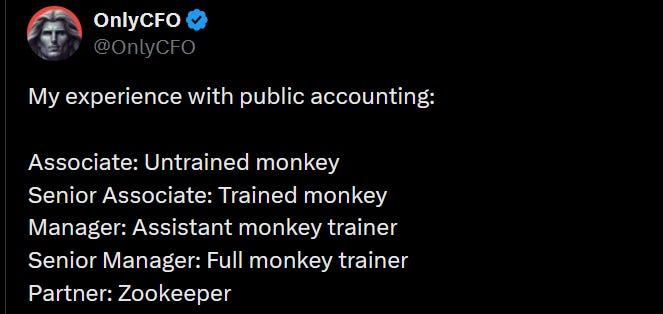
With **current** AI tools and processes, I could easily see 60%+ of audit work being automated that is currently done by humans. Why do I think that? Well, 60% of the work is done by Associates and Senior Associates (0-4 years of experience) and the work they do could easily be done by a monkey…
[
](https://substackcdn.com/image/fetch/$s_!F5-4!,f_auto,q_auto:good,fl_progressive:steep/https%3A%2F%2Fsubstack-post-media.s3.amazonaws.com%2Fpublic%2Fimages%2F3edb9ea2-b125-495a-8a4c-5e74347fcd4b_663x314.png)
Having worked on both sides of financial audits for many years, I can tell you one thing — the inefficiency of some audits is incredibly painful to watch. AI should be able to do soooo much.
But just because audit firms can be inefficient and may charge too much, doesn’t mean their clients are going anywhere…Big 4 audit firms have a beautiful moat. A trusted brand.
**Big 4 Pricing Power:**
The Big 4 firms have a trust monopoly. So if you want to go public, then there is **a lot** of pressure to choose them (and most do). A new AI-first audit firm isn’t going to topple the Big 4.
> No one got fired for buying IBM” (or Big 4 in this case).
But there is a big difference between a 2nd tier audit firm and the auditors that FTX chose…FTX’s auditor prided themselves on being the first audit firm to open a HQ in the metaverse lol. How auditors miss billions of dollars in an audit is beyond me…
[

](https://substackcdn.com/image/fetch/$s_!sekB!,f_auto,q_auto:good,fl_progressive:steep/https%3A%2F%2Fsubstack-post-media.s3.amazonaws.com%2Fpublic%2Fimages%2F7c2aeffa-03eb-45e6-b05b-15bbb0badfcb_950x283.png)
While Big 4 firms have a strong trust moat, I do expect to start seeing interesting competition amongst the top 10 firms. A couple of these firms will adopt AI in a big way and significantly cut fees while also performing better audits. I think we could see some shuffle in the biggest firms…
The big question is how much of their cost savings will be passed on to clients. They are all investing a lot in their AI systems and that took upfront investments.
Of course you should. Especially if KPMG is your auditor 🤣. Just send them the article and say “You guys bring up an excellent point. Will you also be passing on your cost savings from AI as well?”
But seriously…talk to them about their fees. Audit firms (and most professional services firms) are slow to change how they price. They live off increasingly higher billable hours and higher fees. But the IPO market is slow, their consulting/advisory practice is hurting, competition for audit clients is high, and AI **should** be making them more efficient.
If you are stuck with high fees from a Big 4 auditor and you have no IPO in sight (at least in the near term), then threaten to switch to a tier 2nd firm. Get some bids to negotiate.
Public company audit fee benchmarking is easy because it’s a required disclosure. Benchmarking for private companies is obviously harder, but I talk to a lot of CFOs and audit folks so I have some general benchmarks.
There is a lot that goes into audit pricing, but I am simplifying it and making some general guesses based on what I know about these companies.
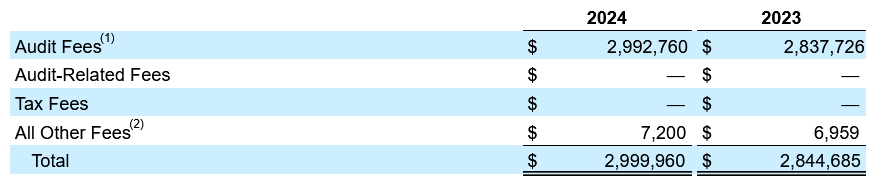
It’s actually insane that a $140M revenue company that is as simple as Expensify is paying $3M in audit fees. If they were private, I would guess that Expensify would be paying ~$250-300K for a Big 4 audit. I can’t understand what their auditors are spending $3M of billable hours on…
[
](https://substackcdn.com/image/fetch/$s_!owkl!,f_auto,q_auto:good,fl_progressive:steep/https%3A%2F%2Fsubstack-post-media.s3.amazonaws.com%2Fpublic%2Fimages%2Fe29d8d52-688e-4d60-ad61-8d375fbba448_870x178.png)
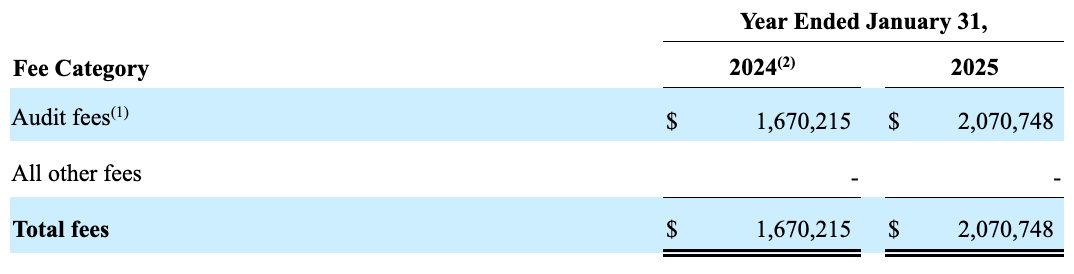
Domo, also a small public company, is paying $0.8M less than Expensify at 2.6x the revenue scale (and I think a little bit more complex than Expensify). Seems like a really high variance in pricing…
When you get bids from different firms you will often see a pretty large variance in their pricing as well.
[
](https://substackcdn.com/image/fetch/$s_!IyhG!,f_auto,q_auto:good,fl_progressive:steep/https%3A%2F%2Fsubstack-post-media.s3.amazonaws.com%2Fpublic%2Fimages%2F4653c2a0-484c-4a86-be43-7704a11cefe8_1074x274.png)
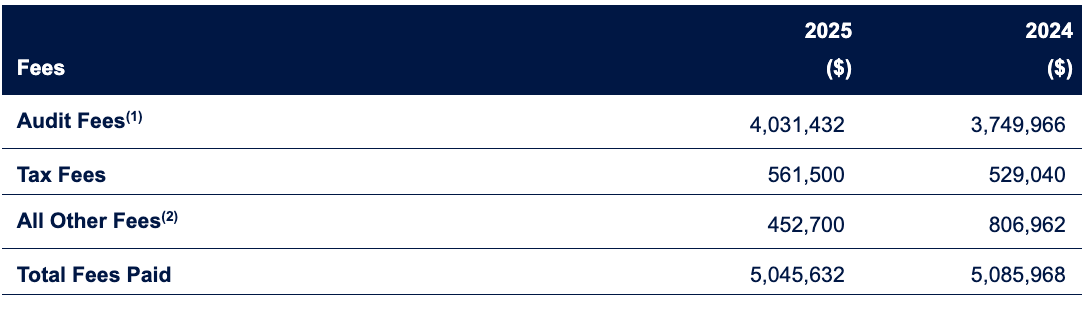
Zscaler is significantly more complex than both companies above and pays $4M. Obviously, audits don’t scale linearly with revenue scale.
[
](https://substackcdn.com/image/fetch/$s_!Vcc9!,f_auto,q_auto:good,fl_progressive:steep/https%3A%2F%2Fsubstack-post-media.s3.amazonaws.com%2Fpublic%2Fimages%2F21da78a9-3ed6-405d-b21f-8840bd972b7c_1082x310.png)
Back in the good old days, Big 4 auditors could actually be cheaper than tier 2/3 firms for early-stage companies if they were hot companies that they thought had a strong chance of eventually IPO’ing. They would set the price low for several years and then slowly raise the prices to market and then get the REALLY big audit fees that went with an IPO and being public.
Most don’t do that today. Too few IPOs and too much money was likely lost on audit clients that never really went anywhere.
For a Big 4 audit, the starting price seems like it’s $100K+ even for small, simple companies. While midsize softwar
Source
AI is Coming for Audit Fees | KPMG Just Proved It
Article reader embedded above — read without leaving the site
Extracted and verified via Adversarial AI Pipeline
Get the IE.AI Weekly Brief
Top 3 AI-distilled industrial engineering insights, every Sunday. No fluff.
No spam. Unsubscribe anytime with one click.